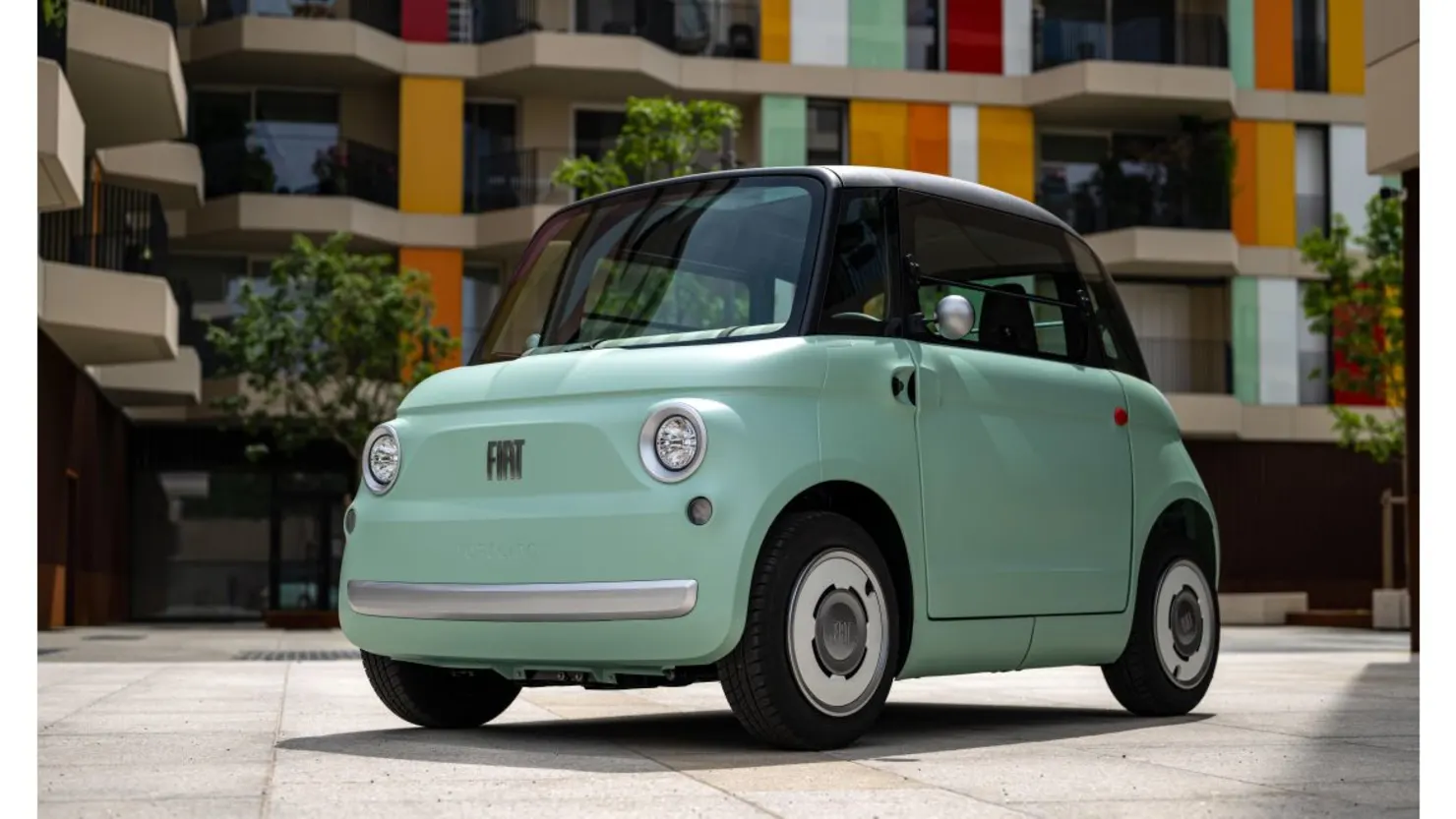
DETROIT – The global automotive giant Stellantis, parent company to the iconic Chrysler brand, has recently set the stage for a compelling new venture in the American market. On a recent Monday, the automaker formally announced its intention to introduce the all-electric, diminutive vehicle known as the Fiat Topolino to the United States. This decision signals a bold move into the nascent micro-mobility segment of the US auto industry, a market historically resistant to ultra-compact vehicles.
While the specific timeline for the vehicle’s debut remains undisclosed, Fiat CEO Olivier François provided confirmation of the ambitious plan, stating that the full details concerning the vehicle’s launch and market strategy would be revealed “next year.” This quiet yet significant announcement immediately drew attention, not only for the product itself but for the surrounding political and regulatory context.
The Political Backdrop: Timing and Perception
Fiat’s decision to confirm the Topolino’s arrival came less than a week after a high-profile meeting at the White House. During this gathering, former President Donald Trump engaged with Stellantis CEO Antonio Filosa, other US lawmakers, and various automotive executives. The topic that captured the imagination of the former President was the Japanese phenomenon of “Kei” cars.
Kei cars—short for Keijidōsha (light automobile)—are a category of micro-vehicles that enjoy specific tax and insurance benefits in Japan due to their restricted size and engine displacement. Trump lauded these tiny vehicles, noting their size and apparent appeal. “They’re very small. They’re really cute,” Trump remarked during the meeting. “And I said, ‘How would that do in this country?’ And everyone seems to think ‘good,’ but you’re not allowed to build them.”
He further indicated that he had tasked US Transportation Secretary Sean Duffy with exploring avenues to permit small vehicles like the Kei “micro” cars to be manufactured and operated within the US. The perceived regulatory barrier is not strictly about prohibition, but about compliance. While not illegal to produce, such vehicles must successfully navigate a stringent labyrinth of American safety standards, speed requirements, and other federal and state regulations that often make ultra-compact, low-speed vehicles economically unviable to adapt.
Despite the highly suggestive timing, a Stellantis spokeswoman maintained that the Fiat announcement was unrelated to Trump’s recent comments. According to the company, the plan to bring the Topolino stateside has been a premeditated move, with the automaker actively gauging customer interest at various US events, including major auto shows. Whether coincidental or strategically timed to capitalize on the political discourse, the Topolino’s potential entry is now inextricably linked to the conversation around micro-mobility regulation.
Defining the Topolino: A Quadricycle, Not a Car
To understand the regulatory challenge and the Topolino’s niche, its classification is crucial. The vehicle, whose name translates to “little mouse” in Italian, is technically categorized by Stellantis as an “all-electric quadricycle,” rather than a traditional car.
This distinction is key. Quadricycles, often regulated under different statutes than passenger vehicles, present unique specifications:
- Top Speed: The Topolino is capped at roughly 28 miles per hour (approx. 45 km/h).
- Driving Range: Its electric powertrain offers a modest range of up to 75 kilometers (less than 50 miles) on a single charge.
- Manufacturing Origin: The vehicle is currently produced at a facility in Morocco.
Its limited speed and range clearly position the Topolino not as a highway vehicle, but as an urban or campus micro-mobility solution, similar to specialized Low-Speed Vehicles (LSVs) already permitted in certain zones and states within the US. The challenge for Stellantis will be to secure widespread state-level regulatory acceptance for a vehicle that fits this highly specific urban niche, potentially requiring special dispensation or operating restrictions in many jurisdictions.
The US Market Challenge: A History of Resistance
Stellantis is attempting to pierce a market that has historically shown little appetite for small, minimalist vehicles. American consumers prioritize size, speed, and perceived safety, making the micro-car a tough sell.
The most recent significant attempt to introduce small European city cars occurred in the aftermath of the 2008 Great Recession. As part of the government’s efforts to save the domestic auto industry, the Italian automaker Fiat was permitted to purchase the bankrupt Chrysler group. A primary condition and incentive for this acquisition was the requirement for Fiat to leverage its small-car expertise to bring fuel-efficient, compact vehicles to the US.
In 2011, Fiat successfully reentered the U.S. market with its iconic 500 city car, subsequent to its takeover of Chrysler (both companies are now cornerstones of the Stellantis group).
Initial sales offered a glimmer of hope. In its first full year on the market in 2012, Fiat managed to sell a respectable 43,772 vehicles in the US. However, this momentum proved short-lived. Over the next decade, American consumers largely reverted to their preference for larger SUVs and light trucks, accelerated by years of relatively low gasoline prices. By the time 2024 arrived, the sale of Fiat vehicles in the US had drastically dwindled to a meager 1,500 units sold annually.
This historical context provides a stark warning for the Topolino. Even stylish, heritage-rich small cars have struggled to carve out a permanent place.
The Strategic Calculation: Why Now?
Despite the difficult history, Stellantis’s decision is likely driven by several forward-looking strategic considerations:
- Exploiting the EV Shift: The Topolino is entirely electric. The rise of electrification and the push towards sustainable urban transport is fostering new market acceptance for non-traditional vehicle formats. Consumers looking for a second or third household vehicle for short, metropolitan trips might view the Topolino as an ideal, low-cost EV commuter.
- Addressing Urban Congestion: Major US cities face increasing issues with traffic and parking. The Topolino’s small footprint offers a compelling solution for navigating dense urban cores where traditional cars are cumbersome.
- Capitalizing on Regulatory Discourse: Regardless of the company’s denial, the timing capitalizes perfectly on the national discussion sparked by the White House meeting. The mention of Kei cars by a high-profile political figure validates the concept of micro-mobility and provides free, valuable publicity just as Stellantis prepares its launch strategy.
- Low Investment, High Margin Potential: By leveraging the existing Topolino design and manufacturing base in Morocco, the initial investment required to bring the quadricycle to the US is significantly lower than developing an entirely new passenger car. If the vehicle finds even a modest niche, the return on investment could be substantial.
The Road Ahead
The introduction of the Fiat Topolino is a high-stakes experiment for Stellantis. It represents an attempt to redefine what an American “vehicle” can be, moving beyond the traditional sedan/SUV paradigm and introducing a European-style micro-mobility solution.
The success of the Topolino will hinge on several critical factors: the final sales price, the creative marketing employed to target urban and youth demographics, and, most importantly, the ability to achieve necessary regulatory clarity across different US states for a high-volume quadricycle operation.
If Stellantis can effectively position the Topolino as a novel, fun, and ultra-affordable electric urban companion, it might finally break the long-standing US resistance to small cars. If not, the Topolino risks joining the ranks of its predecessors—a small, niche novelty quickly overshadowed by the US thirst for powerful, large vehicles. The details expected next year will reveal the depth of Stellantis’s strategy to navigate this challenging terrain.

Tinggalkan Balasan